Environment-Clean-Generations

Environment-Clean-Generations
THE DEFINITIVE BLOG FOR EVERYTHING YOU NEED TO KNOW ABOUT THE ENVIRONMENT YOU LIVE IN, WITH REFERENCE TO LIFE, EARTH AND COSMIC SPACE SCIENCES, PRESENTED BY ENVIRONMENTAL ENGINEER DORU INDREI, ENVIRONMENTAL QUALITY AND ENERGY SPACIALIST
"Life is not about what we know, but what we don't know, craving the unthinkable makes it so amazing, that is worth dying for." Doru Indrei
Custom Search
Showing posts with label biology. Show all posts

New Blood Types Discovered


You probably know your blood type: A, B, AB or O. You may even know if you're Rhesus positive or negative. But how about the Langereis blood type? Or the Junior blood type? Positive or negative? Most people have never even heard of these.
Yet this knowledge could be "a matter of life and death," says University of Vermont biologist Bryan Ballif.
While blood transfusion problems due to Langereis and Junior blood types are rare worldwide, several ethnic populations are at risk, Ballif notes. "More than 50,000 Japanese are thought to be Junior negative and may encounter blood transfusion problems or mother-fetus incompatibility," he writes.


 But the molecular basis of these two blood types has remained a mystery — until now.
In the February issue of Nature Genetics, Ballif and his colleagues report on their discovery of two proteins on red blood cells responsible for these lesser-known blood types.
Ballif identified the two molecules as specialized transport proteins named ABCB6 and ABCG2.
"Only 30 proteins have previously been identified as responsible for a basic blood type," Ballif notes, "but the count now reaches 32."

The last new blood group proteins to be discovered were nearly a decade ago, Ballif says, "so it's pretty remarkable to have two identified this year."

Both of the newly identified proteins are also associated with anticancer drug resistance, so the findings may also have implications for improved treatment of breast and other cancers.
As part of the international effort, Ballif, assistant professor in UVM's biology department, used a mass spectrometer funded by the Vermont Genetics Network. With this machine, he analyzed proteins purified by his longtime collaborator, Lionel Arnaud at the French National Institute for Blood Transfusion in Paris, France.

Ballif and Arnaud, in turn, relied on antibodies to Langereis and Junior blood antigens developed by Yoshihiko Tani at the Japanese Red Cross Osaka Blood Center and Toru Miyasaki at the Japanese Red Cross Hokkaido Blood Center.

After the protein identification in Vermont, the work returned to France. There Arnaud and his team conducted cellular and genetic tests confirming that these proteins were responsible for the Langereis and Junior blood types. "He was able to test the gene sequence," Ballif says, "and, sure enough, we found mutations in this particular gene for all the people in our sample who have these problems."

Beyond the ABO blood type and the Rhesus (Rh) blood type, the International Blood Transfusion Society recognizes twenty-eight additional blood types with names like Duffy, Kidd, Diego and Lutheran. But Langereis and Junior have not been on this list. Although the antigens for the Junior and Langereis (or Lan) blood types were identified decades ago in pregnant women having difficulties carrying babies with incompatible blood types, the genetic basis of these antigens has been unknown until now.

Therefore, "very few people learn if they are Langereis or Junior positive or negative," Ballif says.
"Transfusion support of individuals with an anti-Lan antibody is highly challenging," the research team wrote in Nature Genetics, "partly because of the scarcity of compatible blood donors but mainly because of the lack of reliable reagents for blood screening." And Junior-negative blood donors are extremely rare too. That may soon change.

With the findings from this new research, health care professionals will now be able to more rapidly and confidently screen for these novel blood group proteins, Ballif wrote in a recent news article. "This will leave them better prepared to have blood ready when blood transfusions or other tissue donations are required," he notes.


"Now that we know these proteins, it will become a routine test," he says.

This science may be especially important to organ transplant patients. "As we get better and better at transplants, we do everything we can to make a good match," Ballif says. But sometimes a tissue or organ transplant, that looked like a good match, doesn't work — and the donated tissue is rejected, which can lead to many problems or death.

"We don't always know why there is rejection," Ballif says, "but it may have to do with these proteins."

The rejection of donated tissue or blood is caused by the way the immune system distinguishes self from not-self. "If our own blood cells don't have these proteins, they're not familiar to our immune system," Ballif says, so the new blood doesn't "look like self" to the complex cellular defenses of the immune system. "They'll develop antibodies against it," Ballif says, and try to kill off the perceived invaders. In short, the body starts to attack itself.

.........................................................................................................................................................
..........................................................................................................................................................

"Then you may be out of luck," says Ballif, who notes that in addition to certain Japanese populations, European Gypsies are also at higher risk for not carrying the Langereis and Junior blood type proteins.
"There are people in the United States who have these challenges too," he says, "but it's more rare."
Ballif and his international colleagues are not done with their search. "We're following up on more unknown blood types," he says. "There are probably on the order of 10 to 15 more of these unknown blood type systems — where we know there is a problem but we don't know what the protein is that is causing the problem."
Although these other blood systems are very rare, "if you're that one individual, and you need a transfusion," Ballif says, "there's nothing more important for you to know."

No Men Extinction, We Will Always Be Here!


Over the last few decades, scientists and journalists have speculated that the end of man—men, that is—was nigh. The biological reason for this possibility is the ever-shrinking Y chromosome: 300-200 million years ago, the Y, like females’ X chromosome, had hundreds of genes, but it now contains less than 80, 19 of which code for specifically male traits such as sperm production. 


 This remarkable contraction set people’s imaginations spinning, especially after an opinion piece said in Nature 10 years ago that the Y chromosome might disappear, as it already has in voles, in 10 million years.


A Nature paper published this week, however, may indicate that the Y is sticking around. Biologists at the Whitehead Institute have compared the Y chromosome of rhesus monkeys with the human Y chromosome, and they’ve found that the two have the same number but one of key male-specific genes. This implies that the human Y chromosome’s shrinkage, at least when it comes to key genes, stopped at least around 25 million years ago, when the common ancestor of humans and rhesus monkeys was alive. 

.........................................................................................................................................................
..........................................................................................................................................................


The team says that this 25 million years of stasis indicates that the Y’s days of sloughing genes are over, that the genes it carries now are the essential ones and cannot be removed without seriously impacting reproductive function, while the genes lost in the past were expendable.

It’s hard to say that evolution of the Y chromosome has categorically ceased, though—evolution doesn’t necessarily follow a straight line. And it’s worth remembering that we had males before we had the Y chromosome: the male genes, at that time, were just spread across the genome. Even if more shrinking events eventually do send the Y the way of the leisure suit, it doesn’t mean that males will follow suit.

A Non-Surgical Procedure can Heal Nerves Quickly


A simple new procedure could repair severed sciatic nerves in minutes and have the patient walking within days rather than months.

This relatively inexpensive treatment could dramatically increase the speed of post-surgery recovery while creating greater potential for full function of the injured area
.
University of Texas scientists studied invertebrates’ ability to regenerate nerve axons much more quickly than mammals and mimicked the process.

Through operating on paralyzed rats, a UT research team discovered that preventing the body’s self-healing process keeps the nerve ends from sealing themselves off, making it more difficult to later reattach them.


UT professor George Bittner, who led the study, found that keeping the injured area calcium-free prevents the self-repairing process. Doing this makes for an easier surgery, in which he then begins the self-healing process himself by injecting a calcium-rich solution.


..........................................................................................................................................................

More...

..........................................................................................................................................................

Through this encouraging of the nerves to reattach themselves, Bittner springs the beginning of a healthy healing process.
Bittner has successfully performed this procedure on 200 rats, making a promising prospect for humans with damaged nerves.
Have tolerance for a little light surgery? Watch the amazing video of paralyzed rats walking again here.

You Will Never Guess How this Monkey Communicates


The Philippine tarsier is a tiny primate with a seriously high voice. The saucer-eyed mammal can let out (and listen to) squeaks and squeals at such a high frequency that it effectively gives the mammal a private communication channel.

A team of researchers, led by Marissa Ramsier of Humboldt State University in California, found that the tiny tarsier can hear and emit sounds in the ultrasound range -- that's above 20kHz.


Most humans can't hear in that range, and a dog whistle is pitched to be just inside ultrasound, somewhere between 22 and 23 kHz. A handful of mammals can make sounds in this range -- some whales, domestic cats and a few species of bats -- but few can match the Philippine tarsier.

When issuing warnings or ferreting out crickets for a nighttime snack, the nocturnal faunivores (that's a mix of carnivore and insectivore) can vocalise in a range around 70 kHz, and pick up frequencies above 90 kHz.
"Such values are among the highest recorded for any terrestrial mammal," the researchers note in their paper, which was published in Biology Letters.

.........................................................................................................................................................

More...

  • Hydrogen from Solar Panels
  • The Flying Car
..........................................................................................................................................................

To get this reading, they captured six of the docile creatures and placed them inside custom-built sound chambers to test their sensitivity to high-pitched sounds. Then, they recorded another 35 specimens in the wild to measure the frequency of the tarsier's chatter.

In the paper, the researchers explain that, "ultrasonic alarm calls can be advantageous to both the signaller and receiver as they are potentially difficult for predators to detect and localise." Being able to hear in high ranges might let them eavesdrop on noises made by moths, crickets and birds.

Women's Menstrual Cycles Decode by Men


“Are you on your period?” It’s a question most women have been asked at one point or another by their boyfriend or spouse during a disagreement. It turns out that some men actually can tell when it’s a woman’s time of the month—and it’s not because of bratty behavior.

In a study published online last month in the journal Ethology, psychologists Nathan Pipitone at Adams State College and Gordon Gallup at SUNY Albany asked three groups of men to listen to voice recordings of 10 women counting from one to five. Each woman was recorded four times over the course of one full menstrual cycle. (For those who aren’t familiar with the ins and outs of the female reproductive cycle, women are most fertile during ovulation, when their ovaries release an egg, and least fertile during menstruation, when they shed the unfertilized egg and the lining of the uterus.)

After the first group of men listened to all four recordings from each woman, played in random order, they were asked to guess which recordings were made during the women’s periods. The men had a one in four chance of guessing correctly, but they actually did so 35 percent of the time, a significant difference, the researchers say.


In 2008, Pipitone and Gallup showed that men find the voices of ovulating women more attractive than voices recorded during other points in the cycle, so for the second group in the new study, the researchers replaced the recording made closest to ovulation with one from a less fertile day. Even after the potentially telltale contrast was eliminated, the men pinpointed the voice recorded during menstruation 34 percent of the time.
Perhaps the most telling element of the study was the third experiment, in which a new group of men were not told that the research had anything to do with menstrual cycles. Instead they were asked to choose the most “unattractive” voice recording for each woman. They chose the menstrual recording significantly more often than was predicted by chance—again, 34 percent of the time.

In fact, according to the researchers’ calculations, all three groups singled out the voices recorded during menstruation more often than any of the other voices.

So what was it about the women’s voices that gave away their reproductive status? The men in group one who correctly identified the menstrual recordings said they could tell by the mood (bad versus good), quality (harsh versus smooth), pitch (low versus high) and speed (slow versus fast) of the women’s voices. When the second two groups were asked to score the voices based on these characteristics, they reported that menstrual voices sounded lower in mood, quality and pitch. “The men seemed to determine menstrual voices by picking the most unattractive voice,” Pipitone explains.

..........................................................................................................................................................

More...

...........................................................................................................................................................

There’s already evidence that men subconsciously judge where a woman is in her cycle—lap dancers make 80 percent more money in tips when they’re ovulating compared to when they’re menstruating, according to a 2007 paper—but the new study is the first to demonstrate one way men make that determination.
A subconscious (and often conscious) aversion to menstruation makes sense in evolutionary terms, since males wanting to pass on their genes are better off seeking out females closer to ovulation. Over time, the ability to parse a woman’s menstrual cycle could have proliferated, as more perceptive men reproduced more successfully.

Pipitone says the adaptation is an example of the reproductive arms race known as sexually antagonistic coevolution, a phenomenon seen across living species, from humans to brine shrimp. Males show more interest in females when they’re fertile, so it makes sense that human females—who need a lot of help to raise their particularly helpless infants—hide their fertility status. (Female chimps, by contrast, broadcast their fertility with engorged genitalia.) Theoretically, human males retaliated by developing the ability to detect more subtle fertility cues such as those “leaked” by the female voice.

Hormones induce the vocal changes that give women away. “Vocal production is closely tied to our biology,” Pipitone says of men and women. For example, “Cells from the larynx and vagina are very similar and show similar hormone receptors.” The result is that, “The sound of a person’s voice contains a surprising amount of reproductively relevant information,” Gallup says. The obvious example: By speaking on the phone, we can determine a person’s gender and age. But researchers have also shown that voices alone can be used to directly and indirectly predict characteristics like facial appearance, body type, physical strength and even sexual behavior.

I think one of the most interesting results of the study is that across the board, men chose the menstrual voice around a third of the time. It would seem some men are more perceptive to women’s cycles than others. Pipitone and Gallup plan to investigate this question next.

Aging of Sperm Cells Delayed by Females


A new study, led by Dr. Klaus Reinhardt at the University of Sheffield, shows that females of some species can prolong the lifespan of ordinarily short-lived sperm cells by days, months, or even decades, waiting for the optimal time to use it. The study could have some big implications for the general study of aging, as well.

.........................................................................................................................................................

More...

...........................................................................................................................................................


 Here's the deal: sperm cells are very short-lived, typically. They have a very high metabolic rate compared to other cells, but the reasons why sperm cells deteriorate so quickly is still not well-understood. It was assumed that part of the problem is that sperm cells produce a comparatively high amount of free radicals, which are damaging to the cells.

The study used a technique called fluorescence-lifetime measurement, more often used in oncology, to examine the sperm cells held in the body of female crickets. They compared the metabolic rate and production of free radicals in the female crickets to sperm stored elsewhere, and found that the females were somehow able to alter both of those attributes--the metabolic rate within the females was a whopping 37 percent lower than the other sperm. 


That process allows many species of females to store sperm cells for a very long time. It's not just insects; birds, fish, and reptiles are also shown to have the same ability to delay aging in the sperm cells. The most impressive creature is an insect, though--queen ants can keep these cells alive for an insane 30 years. 

There are some interesting implications coming from this research. It definitely aligns with the theory that free radicals are a key element to the aging of cells, but it also explains why fertility tests on sperm are so unreliable. Without a female to slow down their rate of death, sperm cells could easily perish during the test.

"Nano-Ear" Can Listen to the Songs of Bacteria


German researchers have turned an optical tweezer device into the world’s first “nano-ear” capable of detecting sounds six orders of magnitude below the threshold of human hearing. Using an optically trapped gold nanoparticle as their listening device, the team says they can now detect sounds made at the bacterial level or use their device to tune (or perhaps to test?) the minuscule MEMS machines of the future.

The nano-ear is pretty simple, considering that it relies on technology that has been laying around in the lab for decades now. Optical tweezers are laser devices that use light to trap or manipulate a small particle in a particular point in space by drawing the particle to the most intense point in the laser beam’s electric field. By trapping a gold nanoparticle in just such a optical trap and measuring the influence of various sound waves on that particle, the found that they can “listen” to very small vibrations.


That means sound analysis at extremely low levels. The gold nanoparticle itself is just 60 nanometers (that’s 60 billionths of a meter, or roughly a thousand times smaller than a human hair), which makes it pretty sensitive to very small forces. The researchers used both a “loud” source--a tungsten needle glued to a speaker that vibrates at roughly 300 Hz--and a second source made up of bunches of other gold nanoparticles heated by a second laser to vibrate at just 20 Hz. 


The nano-ear could hear them both loud and clear. The sound waves nudge the trapped gold nanoparticle in the same direction that the waves are propagating, allowing for precise measurement of the sound itself based on the particle’s motion. Experiments showed the nano-ear could detect vibrations down to about -60 decibels--or six orders of magnitude lower than human hears can. That means the device could be used to identify microorganisms or processes at the microscopic level by their sound signatures, or to help design and tune microelectrical mechanical systems.

Nano-Bio-Bandage Can Stop Your Bleeding Almost Immediately


Bleeding out on the battlefield--far from the trauma wards and triage units that might save their lives--is a scenario that soldiers simply have to live with (and try like hell to avoid). But thanks to a nanoscale breakthrough at MIT, the chances of it happening could be significantly reduced. Researchers there have created a nanoscale coating that can stop bleeding nearly instantaneously using a clotting agent already found naturally in blood.
That agent, called thrombin, is coated onto sponges that can be easily packed by soldiers and field medics (or civilian medical personnel for that matter) and shaped to fit just about any kind of wound. Those pre-coated sponges are a pretty big improvement over tourniquets and gauze, which are limited in their ability to stop every kind of bleeding. 
Tourniquets obviously can’t be used on many parts of the body (the neck is a good example), and other glues and chemically treated bandages designed for dressing battlefield wounds come with their own complications and shortcomings. 


Thrombin A clotting agent already found in the blood, thrombin is being layered onto sponges that can stop bleeding almost immediately. via Wikimedia
Thrombin, on the other hand, is already used by the body to stop bleeding. Civilian hospitals also use it already, but it’s in liquid form so sponges must be soaked immediately before they are applied to the wound, making them impractical for the battlefield.
MIT’s sponge instead uses a spray-on biological nanoscale coating using alternating layers of thrombin and tannic acid, which results in a film that contains a large amount of functional thrombin with a shelf life that makes it feasible to pack them into the field. Both substances are already FDA approved, the researchers say, which means the sponges could quickly find their way into wider use.

.........................................................................................................................................................

More...

.......................................................................................................................................................... 

That’s good news for soldiers, and potentially good news for anyone who sustains a trauma far from the emergency room. The MIT lab is now working on a sponge that combines a blood-clotting coating with an antibiotic layer in a single sponge to help fight off infection even as a dressing stops the initial bleeding.
Environment Clean Generations 

The Super-Strong Mice


A team of geneticists has tweaked the genes of mice and worms to create animals with muscles that are twice as strong as normal.
Researchers from the Salk Institute for Biological Studies and two Swiss institutions, Ecole Polytechnique Federale de Lausanne (EPFL) and the University of Lausanne teamed up for the study, which could lead to the development of treatments for muscle degeneration in people who can't exercise.

..........................................................................................................................................................
...........................................................................................................................................................


The team created the super-strong high endurance creatures by suppressing a natural muscle growth inhibitor. Genome regulator NCoR1 is a molecular brake that decreases activity of certain genes. This brake can be "released" through mutation or using chemicals and this, in turn, reactivates gene circuits to provide more energy to muscle and enhance its activity. This lead to the creation of super mice with muscles that are twice as strong as those of regular mice, even when the muscle was inactive.


Ronald M Evans, a professor at Salk's Gene Expression Lab, says: "There are now ways to develop drugs for people who are unable to exercise due to obesity or other health complications, such as diabetes, immobility and frailty. We can now engineer specific gene networks in muscle to give the benefits of exercise to sedentary mice."

Researchers experimented with both mice and nematodes, genetically manipulating the offspring of these species to repress NCoR1, the muscle build-up inhibitor. Without the inhibitor, the muscle develops much more effectively.

The muscly mice were able to run faster and longer before showing signs of fatigue. They also exhibited better cold tolerance. Similar results were seen in nematode worms, which let the researchers conclude that their results could be relevant to a range of living creatures.

Under the microscope the muscles could be seen to be bigger, with denser fibres and with cells that had more mitochondria, the cellular organelles that deliver energy to the muscles.
So far the researchers haven't found any harmful side effects associated with eliminating the NCoR1 receptor from muscle and fat tissue, and are now investigating drug molecules that could be used to reduce the receptor's effectiveness. Johan Auwerx, the lead author from EPFL, said: "This could be used to combat muscle weakness in the elderly, which leads to falls and contributes to hospitalisations. In addition, we think that this could be used as a basis for developing a treatment for genetic muscular dystrophy."


He added that if these results are confirmed in humans, there's no question they will attract interest from athletes as well as medical experts.
Environment Clean Generations

In Third-Degree Burn Treatment, Hydrogel Helps Grow New, Scar-Free Skin


Johns Hopkins researchers have developed a jelly-like material and wound treatment method that, in early experiments on skin damaged by severe burns, appeared to regenerate healthy, scar-free tissue.

In the Dec. 12-16 online Early Edition of Proceedings of the National Academy of Sciences, the researchers reported their promising results from mouse tissue tests. The new treatment has not yet been tested on human patients. But the researchers say the procedure, which promotes the formation of new blood vessels and skin, including hair follicles, could lead to greatly improved healing for injured soldiers, home fire victims and other people with third-degree burns.
The treatment involved a simple wound dressing that included a specially designed hydrogel -- a water-based, three-dimensional framework of polymers. This material was developed by researchers at Johns Hopkins' Whiting School of Engineering, working with clinicians at the Johns Hopkins Bayview Medical Center Burn Center and the Department of Pathology at the university's School of Medicine.


Third-degree burns typically destroy the top layers of skin down to the muscle. They require complex medical care and leave behind ugly scarring. But in the journal article, the Johns Hopkins team reported that their hydrogel method yielded better results. "This treatment promoted the development of new blood vessels and the regeneration of complex layers of skin, including hair follicles and the glands that produce skin oil," said Sharon Gerecht, an assistant professor of chemical and biomolecular engineering who was principal investigator on the study.

Gerecht said the hydrogel could form the basis of an inexpensive burn wound treatment that works better than currently available clinical therapies, adding that it would be easy to manufacture on a large scale. Gerecht suggested that because the hydrogel contains no drugs or biological components to make it work, the Food and Drug Administration would most likely to classify it as a device. Further animal testing is planned before trials on human patients begin. But Gerecht said, "It could be approved for clinical use after just a few years of testing."

..........................................................................................................................................................
...........................................................................................................................................................


John Harmon, a professor of surgery at the Johns Hopkins School of Medicine and director of surgical research at Bayview, described the mouse study results as "absolutely remarkable. We got complete skin regeneration, which never happens in typical burn wound treatment."

If the treatment succeeds in human patients, it could address a serious form of injury. Harmon, a coauthor of the PNAS journal article, pointed out that 100,000 third-degree burns are treated in U. S. burn centers like Bayview every year. A burn wound dressing using the new hydrogel could have enormous potential for use in applications beyond common burns, including treatment of diabetic patients with foot ulcers, Harmon said.
Guoming Sun, Gerecht's Maryland Stem Cell Research Postdoctoral Fellow and lead author on the paper, has been working with these hydrogels for the last three years, developing ways to improve the growth of blood vessels, a process called angiogenesis. "Our goal was to induce the growth of functional new blood vessels within the hydrogel to treat wounds and ischemic disease, which reduces blood flow to organs like the heart," Sun said. "These tests on burn injuries just proved its potential."

Gerecht says the hydrogel is constructed in such a way that it allows tissue regeneration and blood vessel formation to occur very quickly. "Inflammatory cells are able to easily penetrate and degrade the hydrogel, enabling blood vessels to fill in and support wound healing and the growth of new tissue," she said. For burns, the faster this process occurs, Gerecht added, the less there is a chance for scarring.


Originally, her team intended to load the gel with stem cells and infuse it with growth factors to trigger and direct the tissue development. Instead, they tested the gel alone. "We were surprised to see such complete regeneration in the absence of any added biological signals," Gerecht said.
Sun added, "Complete skin regeneration is desired for various wound injuries. With further fine-tuning of these kinds of biomaterial frameworks, we may restore normal skin structures for other injuries such as skin ulcers."
Gerecht and Harmon say they don't fully understand how the hydrogel dressing is working. After it is applied, the tissue progresses through the various stages of wound repair, Gerecht said. After 21 days, the gel has been harmlessly absorbed, and the tissue continues to return to the appearance of normal skin.

The hydrogel is mainly made of water with dissolved dextran -- a polysaccharide (sugar molecule chains). "It also could be that the physical structure of the hydrogel guides the repair," Gerecht said. Harmon speculates that the hydrogel may recruit circulating bone marrow stem cells in the bloodstream. Stem cells are special cells that can grow into practically any sort of tissue if provided with the right chemical cue. "It's possible the gel is somehow signaling the stem cells to become new skin and blood vessels," Harmon said.
Additional co-authors of the study included Charles Steenbergen, a professor in the Department of Pathology; Karen Fox-Talbot, a senior research specialist from the Johns Hopkins School of Medicine; and physician researchers Xianjie Zhang, Raul Sebastian and Maura Reinblatt from the Department of Surgery and Hendrix Burn and Wound Lab. From the Whiting School's Department of Chemical and Biomolecular Engineering, other co-authors were doctoral students Yu-I (Tom) Shen and Laura Dickinson, who is a Johns Hopkins Institute for NanoBioTechnology (INBT) National Science Foundation IGERT fellow. Gerecht is an affiliated faculty member of INBT.
The work was funded in part by the Maryland Stem Cell Research Fund Exploratory Grant and Postdoctoral Fellowship and the National Institutes of Health.
The Johns Hopkins Technology Transfer staff has filed a provisional patent application to protect the intellectual property involved in this project.

A 3-D Printer Makes Human Bones


We’re already printing organs to order, so why not Cmd+P some customized 3-D bone? Washington State University researchers have tweaked a 3-D rapid prototyper designed to create metal parts to print in a bone-like material that acts as a scaffold for new bone cells. In just a few years, the researchers say, doctors and dentists could be printing up custom bone tissue to order.

Reported in the journal Dental Materials, the bone-like material appears to cause no negative side effects and eventually dissolves. But before doing so, it serves as a scaffold for new bone cells. Placed in a medium of immature human bone cells, the printed structures encourage the growth of new bone that fuses with existing bone tissue.

 ..........................................................................................................................................................
...........................................................................................................................................................


"If a doctor has a CT scan of a defect, we can convert it to a CAD file and make the scaffold according to the defect,” Susmita Bose, co-author and professor in WSU’s School of Mechanical and Materials Engineering, said in a press release.


In terms of potential for regenerative medicine, that’s fairly huge. It opens the door to the ability to create perfect--or nearly perfect--replacement implants for damaged or deformed bone tissue and grow new, corrective bone that is the real thing rather than a ceramic or metal analog. And the procedure is relatively fast. Networks of new bone cells reportedly grew within the 3-D printed structures within just a week of placing them in a culture with immature bone cells.

Serotonin can Repair Chronic Liver Disease


Publishing in the leading medical journal Nature Medicine, a team led by Newcastle University academics have identified serotonin receptors which can be targeted with drugs to enhance the natural healing properties of the liver.
In liver disease, extent of tissue damage depends on the balance between the generation of scar tissue and the regeneration of new liver cells. In a significant minority of people who get injury to their organs instead of repairing them, they form scars. This can progress to chronic liver disease and cirrhosis where the scarring is so extensive the liver is unable to clean blood or produce vital hormones and clotting factors. Liver scars also provide an ideal environment for the development of cancers.

Publishing in Nature Medicine and showcased in Nature Research Highlights, the paper describes how working in mouse models the team were able to tip this balance to favour healthy tissue regeneration and block scarring by manipulating the actions of serotonin - the “happy” drug.


...........................................................................................................................................................
...........................................................................................................................................................

Normally when a liver is injured – by a virus such as Hepatitis C or B, by alcohol, environmental factors or by a metabolic or autoimmune condition – specialised blood cells known as platelets make general repairs and secrete serotonin. However, the team found that when scar-forming cells - Hepatic stellate cells (HSC) – are present they are instructed by the serotonin to make more scar tissue and switch off the healthy regeneration.
Identifying the receptor called 5-HT2B through which serotonin instructs the scar forming cells to switch off regeneration, they found that this resulted in less scarring and more regeneration.
Of the work funded by the Medical Research Council and the Wellcome Trust, lead author, Professor Derek Mann said; “These are promising results in mouse models of liver disease and suggest that chemicals targeting 5-HT2B , which are currently in clinical trials for mood disorders and pulmonary hypertension might also have an application in the treatment of chronic liver disease.”The group believe the mechanism may also be found in other organs and offers an exciting opportunity for study in the future.
Reference:  Stimulating healthy tissues regeneration by targeting the 5-HT2B receptor in chronic liver disease, Derek A Mann et al. Nature Medicine.10.1038/10.1038/nm.2490

For Your Eyes Only: Polarising Privacy Monitor Mod


f you are currently staring at an old LCD monitor and a pair of discarded spectacles, and are wondering if there's something you can do with them in the next couple of hours, then good news! We have just the project for you. So go grab yourself a coffee, some paint thinners and an X-acto knife (do not mix these together) and I'll finish writing this post.
The project is this rather excellent "privacy" monitor, a display which can only be seen by you when wearing a pair of magic glasses, as built by Instructables member Dimovi.


The theory is simple: Remove the polarised film from the monitor so that you only see a white backlit screen. Then take this film, cut to fit your spare specs and you can see the screen only when you wear them.


The practice isn't much more complicated. Once you have removed the monitor's bezel, you slice the film like an art thief would slice an etching from its frame. Use the thinners (which you hopefully still haven't mixed with the coffee) to remove any glue still stuck to the glass screen and reassemble.
Now, using the old glasses lenses as templates, cut yourself some new polarised lenses and pop them into the frames. You're done. This is, of course, completely impractical for everyday use, but for secure computer use, or just watching porn whilst sitting comfortably amongst your coworkers, it's ideal.


...........................................................................................................................................................
..........................................................................................................................................................

A Super-Entity Inside the Human Brain


Super-entities are not just limited to dominance of the globe. Just as the economy is intertwined and largely controlled by a small and powerful core network, so too is your brain. Researchers have long known that some areas of the brain are deeply connected to other regions — but now a team from Indiana University and the Netherlands says these connected brain regions form strong connections to each other, creating a cerebral “rich club.”
This club comprises 12 hub regions, which the researchers say are involved in complex human behavior and cognitive tasks. If any of the members of this club were damaged, the effects would be wide-ranging; if brain areas outside the club were damaged, a patient would see localized effects but the overall brain’s information flow would be uninterrupted.


Led by Martijn van den Heuvel, a professor at the Rudolf Magnus Institute of Neuroscience at University Medical Center Utrecht, the team looked at MRI scans of 21 healthy men and women. With a technique called diffusion imaging, they were able to map the brains’ large-scale connections. The 12 ultra-interconnected regions are found in the precuneus; superior frontal cortex; superior parietal cortex; subcortical hippocampus; the putamen and the thalamus. Most of these areas are involved in complex information processing. Van den Heuvel called it the “G8 summit of our brain.”

“It’s a group of highly influential regions that keep each other informed and likely collaborate on issues that concern whole brain functioning,” he said in a statement. “Figuring out what is discussed at this summit might be an important step in understanding how our brain works.”

This could have implications for various mental health disorders, for instance. Neuroscientists could examine how the rich club is affected in patients with schizophrenia. Or they could study how degenerative brain diseases impact the rich club and its connections.

The tightly woven connections among these regions were surprising, said Olaf Sporns, a professor in IU’s Department of Psychological and Brain Sciences. “All these regions are getting all kinds of highly processed information, from virtually all parts of the brain,” he said.

Sporns is among an international team of researchers trying to map all the connections in the brain, what’s known as the connectome. “It's a fundamental step toward understanding the brain as a networked system,” Sporns said.

Laser Beams form our Eyes?


By day, Seok-Hyun Yun and Malte Gather are physicists at Massachusetts General Hospital. But at night, for the past four years, they worked on making a human cell behave like a laser. They built their human laser out of the same three components found in all lasers: a pump source, which provides the initial light energy; an optical cavity, which concentrates the light from the pump source into a beam; and a gain medium, a substance in which electrons are excited until they reach a higher-energy state and simultaneously release that energy as a beam of photons—laser light.

Awesome!

Yun and Gather modified a human kidney cell to produce green fluorescent protein (GFP), the substance that makes jellyfish bioluminescent. This was their gain medium. They cultured these modified cells and placed one between two mirrors, creating the optical cavity—“a cell sandwich,” Yun says. They then sent pulses of blue light from a miniature laser (the pump source) through the cell, where it bounced between the mirrors. The cell glowed green, and light shot out. Through a microscope, the physicists saw a grayish mass (the cell) with luminescent spots (the laser).

Light Pinball: Physicists created a laser by placing mirrors on either side of a human cell and sending pulses of blue light through it. The light bounced back and forth until a laser beam shot out in one direction.

Now What?

A living laser could be used to activate cancer-treating drugs using photodynamic therapy. Doctors could inject light-sensitive compounds into a patient’s bloodstream to seek out tumors and diseased cells. Normally, such compounds are activated externally, but if both the drugs and the light itself were internal, treatment would be more precise. For now, though, Yun is primarily interested in the possibility of using his human laser to detect slight changes in cells. The intracavity light passes through the cells thousands or millions of times before exiting as a laser beam. Yun says that scientists could use the ricocheting light to monitor cell behavior with unprecedented sensitivity, similar to an intracellular high-speed camera. And yes, he says, his process could one day allow people to shoot laser beams from their eyes, though it would be more flashlight than death ray. “If a light source was implanted in the eye, it might be possible to control it with brain signals.”

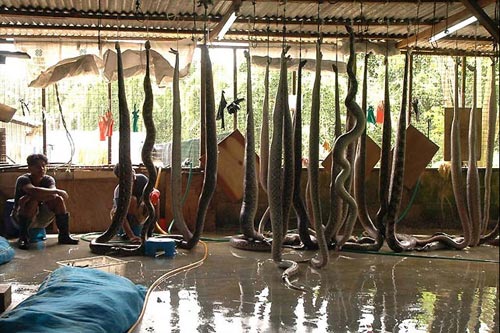
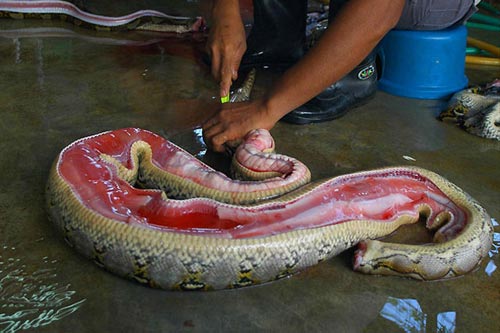
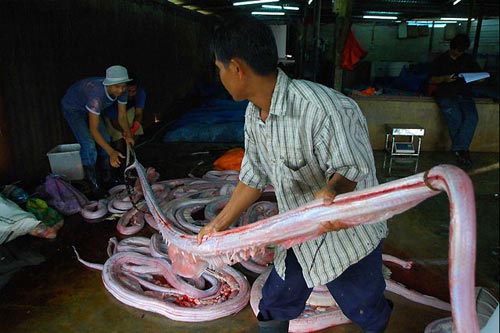
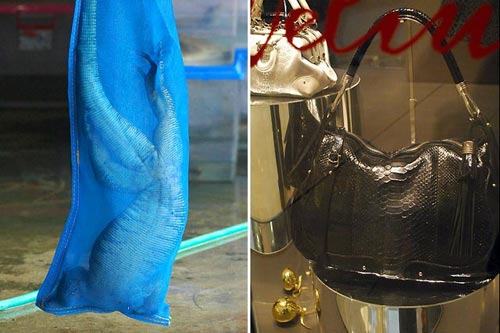
From Living Python to Leather Handbags – The Process in Pictures


It’s parable to kill elephants for teeth and polar bear for fur.
Before you proceed with reading this article, keep in mind that Python is a non-venomous snake. Though python is among the largest snakes of the world, yet they don’t attack humans unless they are provoked but sadly these are the most hunted snakes species. The reason: ‘python leather handbags‘. These pythons bags get sold for a fortune, ranging from $300 to $3500. It’s the demand of the end users that is, indirectly, responsible for the number of pythons killed each year. Below is the pictorial process that shows how brutal the man can be!


The writer would not mind killing the snakes if the natives are starving to death and there’s no other option but to eat snake-flesh, but we certainly do not support such a violent act just to get the leather out of them.
python-skin-air
dead-pythons-hanging
python-meat-snake-flesh
snake-skin-leather
snake-leather-handbag
python-handbags-celebrities

Facts about the Nine Banded Armadillo of USA


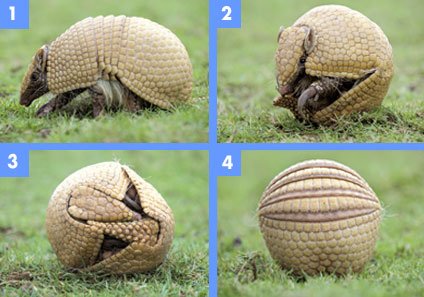
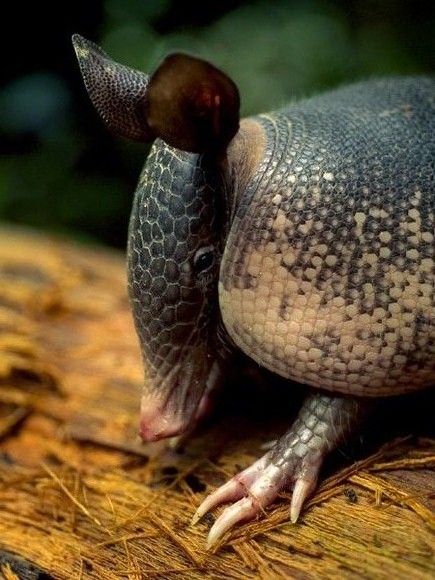
The name ‘Armadillo’ is derived from Spanish word meaning “little armed”. Armadillos have almost twenty species mostly living in South America but this nine banded armadillo is the one that you can find in USA alone. His face is similar to the pork ones, its ears look like rabbit’s ears and covered with nine bands of armor plates giving an impression of an armed vehicle.


Now let’s move towards some amazing features with which the animal is blessed. The armor shell of nine bands are separated by flexible spine which can be quickly used for bending and curling purposes. When there is any risk for armadillo it bends itself in a circular position to form a protective ball by using its shield which enclose its belly, head and other weaker parts of the body. Armadillos are the only living mammals that wear such shells.
It has small but powerful legs to move rapidly. Another unique characteristic of this species is to blow up air in its stomach and intestines that makes its size almost double and he does it when he has to swim across the streams. Without air in his stomach the armadillo cannot swim as its shield density is much heavier. Armadillo can hold their breath as long as 6 minutes and remain under water for that time.
With its razor sharp claws and strong legs it digs the burrows in which they sleep up to 16 hours a day. It has weak eyesight but uses its sense of smell to hunt beetles, ants, termites, and other insects. With the help of sticky saliva and a sticky tongue it can suck insects, little reptiles and even some crops as a meal.
Another defense mechanism is Armadillo can jump 3-4 feet in the air to escape from his arch enemy; snake. But do mind jumping Armadillos while you drive through Texas as they can cause extensive damage to the grill and radiator of the car forcing you to spend the night on road-side.

Top 10 New Species of 2011


Last year we presented you with a list of 10 unknown animals found off Antarctica which was much appreciated by our readers. Today’s article is inspired from International Institute for Species Exploration at Arizona State University where, each year, they compile a list of 10 best new species discovered.

10. Leaproach – Leaping/Jumping Cockroach

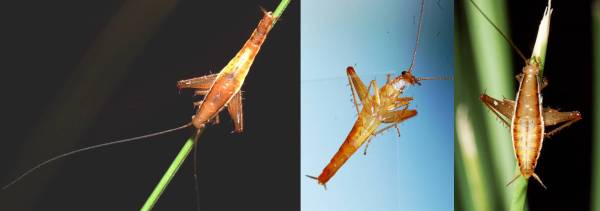
This jumping cockroach was found by two entomologists in South Africa where they decided to name it the ‘Leaproach‘. The species resembles grasshopper and has specially designed hind legs that allows it to jump like a kangaroo. Leaproach has 2 hind legs for jumping and 4 legs at front that helps grab onto passing stems. People usually are disgusted by cockroaches, especially the flying ones and this one is guaranteed responsible for your next nightmare. Read more about leaproach here. The Jumping Cockroach was actually discovered in 2006 by Mike Picker and Jonathan Colville but it made it to the Top 10 species list this year.
jumping cockroach

9. The Glowing Mushroom

Out of 1.5 million species of fungi, there are only 71 that have bio-luminescence properties and this particular one named Mycena luxaeterna has the most striking light emission. The gel-covered stems of the mushrooms emits a very bright yellowish green light, 24 hours a day. It was first discovered in 2010 from last remaining habitat of Atlantic forest in Brazil.
glowing_mushroom

8. Pancake Batfish

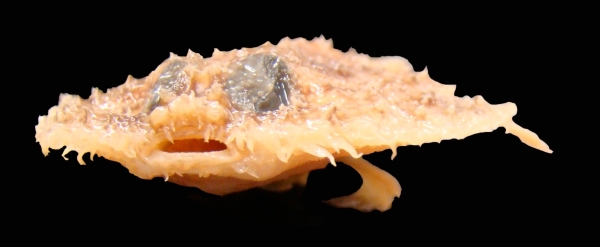
This might be the first pancake you don’t want to eat. The fish was discovered during the Gulf of Mexico oil spill in 2010 and got attention of many scientist. CNN portrayed this little creature to be the first victim of the great oil spill. The fish is flat, brown like a pancake and has spiky hops all over its body. This hideous (according to many) looking creature has an awkward mouth and huge bulging eyes on the head.
pancake batfish

7. First Underwater Mushroom


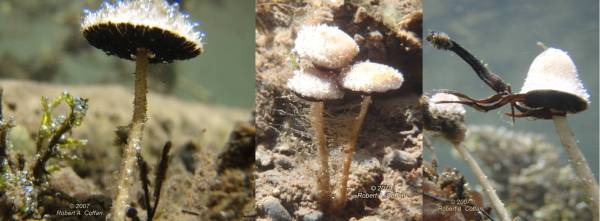
This will be a news to many readers as this, scientifically named Psathyrella Aquatica, is the first report of a mushroom living underwater. We provide you with the video made by the discoverer of this mushroom, the first, first hand encounter. Download Video here.
first underwater mushroom

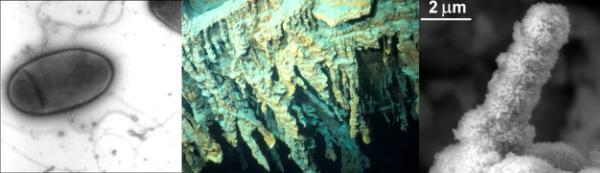
6. RMS Titanic Bacterium

Have you ever heard of a ‘Metal Eating Bacteria’? This new species was found eating iron-oxide on a rusticle from Titanic Ship. Scientists have found out that this bacterium, named Halomonas titanicae, loves to eat steel and creates knob-like mounds of corrosion that along with other microorganisms contributed to the deterioration of Titanic’s metal. This insignificantly small creature will one day make the Titanic disappear. Scientists believe that using the same bacterium they can dispose the naval and merchant ships sunk in the deep ocean.
Metal Eating Bacteria

5. Walter’s Duiker

It’s astonishing that an animal as big as duiker which is from a well-studied group of antelope is found one day in a meat market disguised as a new species. Discovered in Togo, Benin, and Nigeria, this small antelope measures no more than 50cm at the shoulder and weighs about four to six kilograms. To read in detail about Walter’s duiker visit CarnivoraForum.
walter_duiker

4. Swimmer’s Leech

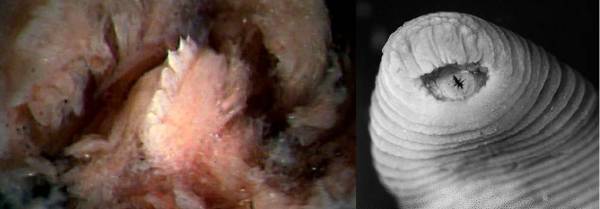
This leech is officially named Tyrannobdella Rex which means tyrant leech king, is a small leech (2 inch long) found off Amazon. It was discovered about few year ago from the nose of a little girl who used to take bath in Amazon river. Unlike other leeches, this one has only a single jaw but 8 large teeth. These teeth are at least 5 times stronger than those found in any other leech. To investigate more about this unique swimmer’s leech visit Wired.
Tyrranobdella Rex

3. Pollinating Cricket

We all know bees are good pollinators, but there’s someone else who share the honor. This cricket, named Glomeremus orchidophilus, is the only species of cricket known that can pollinate. It’s found off the Reunion Islands in Western Indian Ocean in year 2010. The discovery of this species indicates how even the smallest of insect helps maintaining the balance of nature and if such species starts to extinct one after the other, there will be a long lasting imbalance in the environment. BBC has a documentary on this cricket, watch and read here.
pollinating_cricket

2. Forest Monitor Lizard

Although this lizard was known to locals in Philippines but it managed to elude biologists who surveyed the area many times, by hiding in the trees. The large lizard can grow up to 6.6 feet but weighs only about 10 kilograms at that size. Its body is covered with gold flecks and tail marked with black and green segments. It’s named forest monitor because it lives in forest in secrecy and monitors the outside world without exposing itself.
forest_monitor

1. Darwin’s bark spider

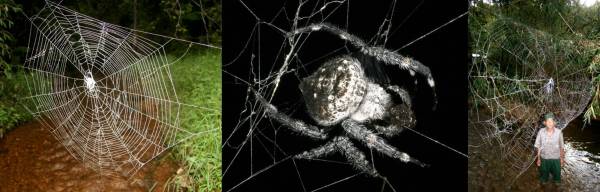
Darwin’s bark spider has made it to the top of the list not because of the spider itself, but the web it’s capable of making. First discovered in year 2009 in Madagascar, this spider builds the largest orb-style web known to man. Scientists have found the webs of this species as long as 25m in length spanning over rivers, streams and bridges. The total web area can reach up to 2.8 square meters. The silk of the web is found to have a maximum toughness of 520MJ per cubic meter making it the toughest biological material. Scary, right?
darwin_bark_spider

     Arizona State University
     Environment Clean Generations

Related Posts Plugin for WordPress, Blogger...

Search

Custom Search

 
Design by Wordpress Theme | Bloggerized by Free Blogger Templates | coupon codes