Environment-Clean-Generations

Environment-Clean-Generations
THE DEFINITIVE BLOG FOR EVERYTHING YOU NEED TO KNOW ABOUT THE ENVIRONMENT YOU LIVE IN, WITH REFERENCE TO LIFE, EARTH AND COSMIC SPACE SCIENCES, PRESENTED BY ENVIRONMENTAL ENGINEER DORU INDREI, ENVIRONMENTAL QUALITY AND ENERGY SPACIALIST
"Life is not about what we know, but what we don't know, craving the unthinkable makes it so amazing, that is worth dying for." Doru Indrei
Custom Search
Showing posts with label technology. Show all posts

Cool Software Adds Realistically 3D Objects to Pictures

A simple programming tool can build a model of a scene in a two-dimensional photograph and insert a realistic-looking synthetic object into it. Unlike other augmented reality programs, it doesn’t use any tags, props or laser scanners to model a scene’s geometry — it just uses a small number of markers and accounts for lighting and depth. The result is an augmented scene with proper perspective, which looks so realistic that testers could not distinguish between an original photo and a modified one.

With just a single image and some annotation by a user, the program creates a physical model of a scene, as demonstrated in the video below.


Kevin Karsch, Varsha Hedau, David Forsyth and Derek Hoiem at the University of Illinois at Urbana-Champaign developed a new image composition algorithm to generate an accurate lighting model. It uses geometry to build upon existing light-estimation methods, and it can work with any type of rendering software, the researchers explain. It works by breaking down the scene’s geometry and depth of field, and then determining how much of the scene’s overall illumination is a result of reflection (albedo) and how much directly emanates from light fixtures. This provides light parameters that can be transposed onto an inserted object. The team has developed algorithms for interior lights and for external light sources, typically light shafts from the sun.


..........................................................................................................................................................
..........................................................................................................................................................

To test how well it worked, Karsch et al. showed some study participants a series of images — some with no synthetic objects, and some with synthetic objects inserted in one of three ways: either an existing light-derivation method, their new algorithm with a simplified lighting model, and their new algorithm in all its light-modeling glory. The subjects had computer science or graphics backgrounds.
“Surprisingly, subjects tended to do a worse job identifying the real picture as the study progressed,” the authors explain in a paper describing their method. “These results indicate that people are not good at differentiating real from synthetic photographs, and that our method is state of the art.”
The method could be used for video games, movies, home decorating or other uses. The work is slated to be presented at SIGGRAPH Asia 2011.


Cold Fusion Boiling Competition


It seems Defkalion is serious about independent testing. In a press release this week, the company invited "requests from internationally recognised and reputable scientific and business organisations interested to conduct their independent tests."


Would-be testers will have to visit Defkalion's laboratory in Athens, where the company is making available two Hyperion power units, one "live" and the other inert, for comparison. Defkalion say that the live unit will achieve a coefficient of performance of at least 20, in other words putting out 20 times as much energy as goes in to heat it. It's a bold move, especially compared to Andrea Rossi who has kept independent testers at arm's length from his demonstrations. It remains to be seen whether the tests really will dispel doubts or if they will raise more questions than they answer.

It's been an exciting few weeks since Andrea Rossi demonstrated his one-megawatt E-Cat power plant with apparent success. Critics still believe that the test was a sham, the mystery customer is a fake, and there is no concrete evidence the technology works. Rossi has been busy since then, and the E-Cat bandwagon is rolling onwards. But now he has rivals in the cold fusion business. Is this evidence that the technology is real and can be replicated? Or just that someone else wants a piece of a possible scam of the decade?


Cold fusion, otherwise known as "low energy nuclear reaction" (LENR) technology has yet to gain any scientific respectability. This hasn't stopped Greek company Defkalion Green Technologies launching its own range of cold fusion power plants, rivals to Rossi's E-Cat. In a press release (.pdf), the company announced they would be selling a range of units under the name Hyperion, from small domestic boilers to industrial power plants.
They have a detailed specification document for its product (.pdf) and say the launch is due early 2012. Unlike Rossi, it invites independent third parties to test its products and report the findings "under agreed protocol." Its customers will not be bound by non-disclosure agreements, whereas Rossi's dealings have been highly secretive.

Defkalion used to have a close working relationship with Rossi. Originally the company was to produce thousands of E-Cats a year from a factory on Xanthi using Rossi's design under licence. The relationship broke up in August, for reasons which have never been fully disclosed. The company has persevered with a cold fusion device of its own, which it insists has been developed independently and also that Hyperion is more stable than Rossi's E-Cat.


..........................................................................................................................................................

More...

...........................................................................................................................................................


Like the E-Cat, Hyperion will initially be used for producing heat only, with electricity generation following. The first will be a one-megawatt device, the same scale as the one in Rossi's demonstration in October.

Curiously, Rossi does not accuse Defkalion of stealing intellectual property. Instead, he insists that it has never known the details how the E-Cat works. He says it cannot make its device operate without his secret catalyst, which it was hoping to acquire. "There are clowns saying they have a technology copied from us, actually they have just a moke up (sic), waiting for the piece of info they need to make a real copy," Rossi wrote in his Journal of Nuclear Physics blog, congratulating himself for outwitting them.

However, Defkalion spokesman Alexandros Xanthoulis told Swedish science magazine NyTeknik that they know exactly what the catalyst is. In a piece of subterfuge, a spectroscopic examination was carried out on an E-Cat being while it was being tested without Rossi's knowledge. However, to maintain "fair play", Defkalion's scientists say they developed their technology without using this information.

The lack of a patent means that (if this is not a hoax) the secret is potentially worth billions. Hence Rossi does not want anyone to repeat his results or see the kernel of the E-Cat. So long as he has paying customers he is happy for the rest of the world to dismiss the technology as not worth investigating.

The Largest-Ever Quantum Calculation Uses 84 Qubits and Takes Just 270 Milliseconds


Vancouver-based quantum computer maker D-Wave Systems is the kind of company that often gets mixed reviews--either kudos for working on the very edge of a new and potentially groundbreaking technology, or dismissal for not exactly delivering the kind of Earth-shattering technology that people were perhaps expecting. Regardless, today D-Wave is marking one in the win column after announcing that it has achieved the world’s largest quantum computation using 84 qubits.

A quick quantum computing primer: qubits, or quantum bits, are the basic units of quantum information, comparable to (but quite different from) a classical bit. The main benefit of qubits is that they can exploit the laws of quantum mechanics to exist in two states simultaneously. In comparison to classical computing, that means a single superconducting qubit can exist as both a “one” and a “zero” at the same time, whereas a classical bit can only be one or the other.


.........................................................................................................................................................

More...

..........................................................................................................................................................

This vastly improves speed and computing power. It also has proven pretty difficult to execute. A decade ago quantum computers were using a handful of qubits to factorize numbers and do other grade-school level computations. And in recent years, they haven’t come much further forward, even as D-Wave released a $10 million 128-qubit quantum computer for sale.

To prove that quantum computing really is pushing forward, Zhengbing Bian at D-Wave used one of the company’s machines to tackle a very difficult calculation known as a “two-color Ramsey number.” This is somewhat explained by the “theorum on friends and strangers,” which you can feel free to read up on but will not be explained in detail here for reasons including, but not limited to, the fact that I can’t begin to adequately/coherently explain it. But the math isn’t the point here. The point is that the math is mind-numbingly difficult, and the quantum computer solved it in just 270 milliseconds.

The system required just 28 qubits to actually solve the Ramsey problem, using the other 56 for error correction. And, because this was a Ramsey problem that has already been solved by conventional means, Bian and company know that their D-Wave computer came up with the correct solution (it was 8).

Whether or not this glowing achievement is going to boost confidence in D-Wave’s technology and approach is yet to be seen, but the company already has some support in industry. A certain Mountain View-based Internet search company has taken an active interest in D-Wave’s computing technology, and last year Lockheed Martin bought one of D-Wave’s quantum computers for itself.

Pentagon Use 'Time Hole' to Make Events Disappear


Soldiers could one day conduct covert operations in complete secrecy, now that Pentagon-backed physicists have figured out how to mask entire events by distorting light.

A team at Cornell University, with support from Darpa, the Pentagon's out-there research arm, managed to hide an event for 40 picoseconds (those are trillionths of seconds, if you're counting). They've published their groundbreaking research in this week's edition of the journal Nature.


This is the first time that scientists have succeeded in masking an event, though research teams have in recent years made remarkable strides in cloaking objects. Researchers at the University of Texas, Dallas, last year harnessed the mirage effect to make objects vanish. And in 2010, physicists at the University of St. Andrews made leaps towards using metamaterials to trick human eyes into not seeing what was right in front of them.
Masking an object entails bending light around that object. If the light doesn't actually hit an object, then that object won't be visible to the human eye.

..........................................................................................................................................................
..........................................................................................................................................................

Where events are concerned, concealment relies on changing the speed of light. Light that's emitted from actions, as they happen, is what allows us to see those actions happen. Usually, that light comes in a constant flow. What Cornell researchers did, in simple terms, is tweak that ongoing flow of light -- just for a mere iota of time -- so that an event could transpire without being observable.


The entire experiment occurred inside a fiber optics cable. Researchers passed a beam of green light down the cable, and had it move through a lens that split the light into two frequencies, one moving slowly and the other faster. As that was happening, they shot a red laser through the beams. Since the laser "shooting" occurred during a teeny, tiny time gap, it was imperceptible.

Sure, the team's got a ways to go before they're able to mask 30 seconds of action, let alone several minutes. But the research certainly opens up new possibilities. For one, masking super-quick events, like those that occur with data transmission, could help conceal covert computer operations.

In the words of Nature editors, the research marks "a significant step towards full spatio-temporal cloaking." But it could be decades before military personnel will basically be able to zap history, as it happens: According to Cornell scientists, it'd take a machine 18,600 miles long to produce a time mask that lasts a single second.

Wash Your Clothes Using Sunlight


Material scientists have developed a new cotton fabric that cleans itself of stains and bacteria when exposed to sunlight. This would mean you could transform your garments from stinky to sparkly simply by simply hanging them out in the sunshine.

..........................................................................................................................................................
...........................................................................................................................................................


Mingce Long and Deyong Wu from Donghua University developed the fabric using a coating made from a compound of titanium dioxide and nitrogen. This breaks down stains and kills microbes when exposed to some types of light.
Titanium dioxide has already found uses in self-cleaning windows, kitchen and bathroom tiles. The authors admit that there are already other self-cleaning fabrics but these tend to work most efficiently when exposed to intense ultraviolet rays. This coating works within the visible spectrum.


Fabric coated with the material could easily remove an orange dye stain when exposed to sunlight. Further nanoparticles made from silver and iodine helps to accelerate the discoloration process. The coating even remains after washing and drying the clothes. Although presumably that wouldn't be necessary if the Sun already did the leg-work.
The study appears in ACS Applied Materials & Interfaces
Environment Clean Generations

Wall of Sound Against Riots


RIOT shields that project a wall of sound to disperse crowds will reduce violent clashes with police, according to a patent filed by defence firm Raytheon of Waltham, Massachusetts.


The device looks similar to existing riot shields, but it incorporates an acoustic horn that generates a pressure pulse. Police in the US already use acoustic devices for crowd control purposes that emit a loud, unpleasant noise.
The new shield described by Raytheon produces a low-frequency sound which resonates with the respiratory tract, making it hard to breathe. According to the patent, the intensity could be increased from causing discomfort to the point where targets become "temporarily incapacitated".

..........................................................................................................................................................
...........................................................................................................................................................

Acoustic devices haven't seen wide adoption because their range is limited to a few tens of metres. The patent gets around this by introducing a "cohort mode" in which many shields are wirelessly networked so their output covers a wide area, like Roman legionaries locking their shields together. One shield acts as a master which controls the others, so that the acoustic beams combine effectively.
Raytheon declined to comment on the work.

"We do not have sufficient technical detail yet to determine if there are any hidden medical implications," says Steve Wright of Leeds Metropolitan University in the UK. "These are always a concern because of the risk to sensitive bodily functions such as hearing, or even inducing panic attacks in asthmatics."
The biggest danger, he warns, is that the technology would be used for political control. "If authorities in Egypt or Syria had this, would they use it for dispersal or to shove crowds into potentially lethal harm's way?"

The First Stretchable, Elastic Electrical Cord


Japanese Spandex-maker Asahi Kasei Fibers has developed the world’s first elastic electrical cable, a stretchy conductive connector that could go a long way toward reducing cord clutter. But it’s not just a way to help you manage your multi-cord mess. Called Roboden, the stretchable cord could enable new generations of electronics-embedded textiles and robotic skins.


..........................................................................................................................................................
...........................................................................................................................................................


Roboden is already available in various kinds of cables, including USB cables and standard power cords, giving you that little bit of extra reach you always need to reach that wall socket. But the real upside is in the realm of automated machinery and robotics. Here, connecting cables previously had to be as long as the machines maximum range of motion to allow the machine to move unrestricted. This meant a lot of loose cord laying around.


With Roboden, the cord stretches when the robot/machine moves and pulls taut when the machine relaxes the tension, keeping extra cord from getting in the way. Likewise, when the day arrives that we want to start sheathing our humanoid robots in soft, skin-like coverings, stretchable electronics and chips are going to be the technologies that get us there.


Kobo Vox E-book Reader


Why do you want an e-book reader? It sounds like a trick question, but your answer is vital. If you said "to read books" look no further than traditional monochrome e-ink readers such as the Amazon Kindle. If you said "to read books and…" the Kobo Vox is aimed at you.
Designed to go head-to-head with Amazon's much-hyped Kindle Fire, the Kobo Vox is part of a new wave of e-book readers aimed at people who find reading isn't enough. Consequently these devices are hybrids that keep e-books and e-book purchasing at their core, but add aspects of tablet functionality such as app stores and multimedia playback while keeping the price low. On paper this sounds like the best of both worlds. The trouble is we're not dealing with paper anymore.

 Design
This material difference becomes apparent before the Vox is switched on. At 192.2 x 129.5mm the Vox has a conveniently small footprint, but at 13.4mm deep it is almost twice as thick as both a standard Kindle (fourth generation) and the iPad 2. At 400g it is also more than twice the weight of the Kindle, two thirds the weight of an iPad 2 and actually heavier than Samsung's 345g Galaxy Tab 7.0 Plus Android tablet.


In all fairness to Kobo, the Vox is essentially a stripped down tablet and it runs Android 2.3 "Gingerbread" so these figures shouldn't be surprising. What does surprise is how disappointing the Vox is in hand, with lacklustre build materials and poor-feeling construction. The exterior of the Vox is a mess of unflattering plastics. The facia is reflective piano black, the screen itself is plastic not glass and lacks an oil-resistant layer to ward off fingerprints. The sides switch to a matt black finish with a plastic power button and volume rocker -- both painted silver to look like metal -- while the rear changes again to a rubber textured diamond pattern. Superficially the pattern itself is pleasant on the eyes but much as the facia picks up every fingerprint, the rear shows off every bump, scuff or scratch which doesn't bode well for its long term durability.

..........................................................................................................................................................
...........................................................................................................................................................


Poor screen, poor performance

Unfortunately this is just the tip of the iceberg. Switch on the Vox and you'll quickly notice the 7-inch screen is second rate. Seven inches is quickly becoming the norm for this new breed of e-book reader as is its 1024 x 600 resolution, but Kobo has broken from the pack in choosing an FFS+ display instead of IPS. This gamble fails. Colours look washed out, but worse still text is notably pixelated making it unpleasant to read over longer periods. For years smartphones may have gotten away with substandard call quality in lieu of additional functionality, but we can't see how an e-book reader can similarly survive being so poor at its primary purpose.


The iceberg gets bigger still. In opting for so much plastic Kobo has committed a cardinal sin: not using a glass screen. The company insists the Vox uses a capacitive layer, but response times are as poor as an old resistive touchscreen and multiple touches are commonly required to get it to recognise commands. That said we can't lay all the blame squarely on the screen because the hardware is equally culpable.

Google Maps Indoors


With the release of Google Maps 6.0 for Android devices, the search giant's comprehensive cartography app now features floor plans for the insides of buildings.
Places like the Mall of America and the Narita International Airport in Japan show individual rooms, shops, toilets and areas of interest. It also accounts for multiple storey buildings, with a floor selector column on the right.

..........................................................................................................................................................
...........................................................................................................................................................

Detailed floor plans automatically appear when you're viewing the map and zoomed in on a building where indoor map data is available. Then, the Google Maps dot will show your location within a few metres. You can use search to find stuff, and Google Latitude to find friends.


GPS is notoriously spotty when indoors. That's why Google uses back-up data from other sources. "We don't only use GPS for the indoor location feature," a spokesperson for Google. "As with My Location for outdoor spaces, we use data from various components including cellular tower, GPS and publicly broadcast Wi-Fi information, to estimate a location indoors."

Similar technology is used to automatically detect your altitude, and figure out what floor you're standing on. "The phone's ability to measure Wi-Fi signals is important for determining details like floor level," the spokeswoman told us.

Right now a few retailers, airports and transit stations in the United States and Japan have had their innards mapped. This includes a bunch of Ikea and Macy's stores across the US, and the Roppongi Hills mega-complex in Tokyo. More public buildings across the world will be added all the time.

If you're a business owner, on the other hand, and want your location's floor plan included on Google Maps, the company has created a swanky upload wizard over at its Floor Plans site. All you have to do is find your shop on Google Maps, upload the blueprints and then line-up the edges.


For the time being, this feature is only available on Android phones. Restless iPhone users will have to stay restless, as a Google spokeswoman told the LA Times that there is no specific timing for when indoor maps will be available for non-Android platforms.

Toyota Fun-Vii: A car That Thinks It's a Smartphone


If Toyota has its way, paint jobs could become a thing of the past, because it’s unveiled a car that can change its whole look in an instant.
The Fun-Vii, which stands for ‘vehicle interactive internet’, is a concept car with a bodyshell made of touch-screen panels that not only allow the driver to change the pattern on display but also connect the car to the dealership’s website for a check-up.
It even greets its driver with a message that flashes up on the door.

Toyota showed off the unique car ahead of the Tokyo Motor Show today, with company president Akio Toyoda saying: ‘A car must appeal to our emotions. If it’s not fun, it’s not a car.’

 ..........................................................................................................................................................
...........................................................................................................................................................
The car giant has no plans to put Fun-Vii into production just yet, but explained that it’s an example of the kinds of technologies that it could incorporate into designs in the future.

It said in a statement: ‘It heralds Toyota’s vision of a future where people, cars and society are linked.’

Smart: The car can display various graphics on its interior or exterior
Two other electric Toyota concept cars have also been revealed.
The FT-EV III is a four-seater electric vehicle based on the Toyota iQ.
Equipped with a lithium-ion battery, it achieves an estimated cruising range of 65 miles on a fully charged battery.

Wacky: The Fun-Vii won't go into production but demonstrates the kinds of technologies that could be incorporated into cars in the future

Toyota is developing EV technology with the aim of launching a vehicle suitable for short-distance travel in 2012, when the plug-in market comes to the UK.
The FCV-R (Fuel Cell Vehicle – Reality & Revolution) concept, meanwhile, is a practical, family sized vehicle fuelled by hydrogen.
This concept model represents the next step towards the commercial launch of a Toyota fuel cell vehicle by 2015.


This should be able to reach 430 miles on one charge.


The Limbo-Dancing Robot


It seems that robots with a soft touch are all the rage.
A flexible robot built by Harvard scientists that can wiggle and worm through tight gaps is the latest prototype in the growing field of soft-bodied machines.
The inspiration for it came from squids and starfish, which deform their shapes to move around. Robots that can manoeuvre in this way could be particularly useful after a disaster like an earthquake, with rescuers able to send them through small cracks.


Shaping up to be a great innovation: The flexible robot can inflate and deflate and wiggle and squirm to allow it to move through small gaps
They could also be deployed on battlefields where the terrain would be too rough for more conventional rigid machines.

..........................................................................................................................................................
...........................................................................................................................................................

'The unique ability for soft robots to deform allows them to go places that traditional rigid-body robots cannot,’ Matthew Walter, a roboticist at the Massachusetts Institute of Technology, said in an email to the Associated Press.
A team from Tufts University earlier this year showed off a four-inch (10-centimetre) caterpillar-shaped robot made of silicone rubber that can curl into a ball and propel itself forward.

The Harvard project, funded by the Pentagon's research arm, was described online yesterday in the journal Proceedings of the National Academy of Sciences.

The new robot, which took two months to construct, is five inches (12.7 centimetres) long. Its four legs can be separately controlled by pumping air into the limbs, either manually or via computer. This gives the robot a range of motions including crawling and slithering.
The researchers, led by chemist George M Whitesides, tested the robot's flexibility by having it squirm underneath a pane of glass just three-quarters of an inch from the surface.
Scientists maneuvered the robot through the tiny gap 15 times using a combination of movements. In most cases, it took less than a minute to get from side to side.
Researchers eventually want to improve the robot's speed, but were pleased that it did not break from constant inflation and deflation.
‘It was tough enough to survive,’ said Harvard postdoctoral fellow Robert Shepherd, adding that the robot can traverse on a variety of surfaces including felt cloth, gravel, mud and even Jell-O.
There were drawbacks, though. The robot is tethered to an external power source and scientists need to find a way to integrate the source before it can be deployed in the real world.
‘There are many challenges to actively moving soft robots and no easy solutions,’ Tufts neurobiologist Barry Trimmer, who worked on the caterpillar robot, said in an email.
Robotics researcher Carmel Majidi, who heads the Soft Machines Lab at Carnegie Mellon University, said the latest robot is innovative even as it builds on previous work.
‘It's a simple concept, but they're getting lifelike biological motions,’ he said.
Click here to see video. 
Environment Clean Generations

'Moving Platforms' Could Make Rail Travel More Efficient

Paul Priestman from London design consultancy Priestmangoode has come up with a way of letting passengers board trains while they're moving, making the rail network more efficient.
His "Moving platforms" concept would see long-distance trains in continuous motion. Separately, a tram system would collect passengers from local stations. Those trams would then speed up alongside the long-distance trains, and dock alongside them -- while both are moving at speed -- so that passengers can transfer from one to the other. The carriages would stay connected for approximately the same amount of time that the train normally spends stopped at a station.


Once the transfer is complete, the tram would slow down again to make another trip around the local stations to allow passengers to embark and disembark locally. Tickets would be checked using an RFID system, not unlike an Oyster card, to ensure that each passenger pays the correct fare.
The system would not only let the high-speed trains be more efficient and have a more predictable schedule, but also decrease the amount of time passengers spend waiting on cold platforms for a connecting train. You can see Priestman explain his thinking in the video embedded below.


...........................................................................................................................................................
...........................................................................................................................................................

On Priestmangoode's website, the agency says: "Our experience of various systems has led us to conclude that it is hugely inefficient to run a new 21st century high tech, high speed train service on a 19th century infrastructure that was invented for steam trains."

Priestman adds: "I'm under no illusion this is a big idea, but we have to think big. The world is going to a be a very different place in 10 to 20 years time and we have to think of alternative ways of travel."

For Your Eyes Only: Polarising Privacy Monitor Mod


f you are currently staring at an old LCD monitor and a pair of discarded spectacles, and are wondering if there's something you can do with them in the next couple of hours, then good news! We have just the project for you. So go grab yourself a coffee, some paint thinners and an X-acto knife (do not mix these together) and I'll finish writing this post.
The project is this rather excellent "privacy" monitor, a display which can only be seen by you when wearing a pair of magic glasses, as built by Instructables member Dimovi.


The theory is simple: Remove the polarised film from the monitor so that you only see a white backlit screen. Then take this film, cut to fit your spare specs and you can see the screen only when you wear them.


The practice isn't much more complicated. Once you have removed the monitor's bezel, you slice the film like an art thief would slice an etching from its frame. Use the thinners (which you hopefully still haven't mixed with the coffee) to remove any glue still stuck to the glass screen and reassemble.
Now, using the old glasses lenses as templates, cut yourself some new polarised lenses and pop them into the frames. You're done. This is, of course, completely impractical for everyday use, but for secure computer use, or just watching porn whilst sitting comfortably amongst your coworkers, it's ideal.


...........................................................................................................................................................
..........................................................................................................................................................

Chemistry Puzzler SpaceChem Offered to Schools for Free


Indie game developer Zachtronics Industries is offering its chemistry-focused puzzler SpaceChem to schools for free, in a bid to outdo other educational games, "that often forget to be fun."
The game is all about constructing complicated chemical factories that can autonomously turn a handful of atoms -- like hydrogen and carbon -- into real-world molecules -- like methane (CH4), without everything breaking.


To do this, you create tracks for a pair of nanoscopic robots called waldoes to run along, and lay down commands (like pick-up, bond or fuse an atom) for them to carry out when they pass over.

...........................................................................................................................................................
...........................................................................................................................................................

What you're really doing is visual programming, complete with debugging. The majesty of SpaceChem is the devious way it teaches you techniques like in-order execution, loops, branching, synchronisation primitives and subroutines, without you even realising it. Making it a perfect game for education.
 Zachtronics admits that SpaceChem's molecular machine is "a concept that is not entirely grounded in reality," and points out that later levels introduce imaginary atoms (and space aliens), but reckons that it offers "an opportunity to practice problem solving skills," and "a way to get students excited about computer programming and chemistry."

Educators can email zach@zachtronicsindustries.com to request a permanent site license of the game, until January 2012.
The game has also recently received a new mode called sandbox, which lets players construct experimental molecular computers and pipelines. To celebrate, the indie puzzler has received a permanent price cut from £8.99 to £6.99. It's also available on iPad in the form of SpaceChem Mobile, for £3.99.
 Environment Clean Generations

Faster Chips, Faster Internet, Everything Faster


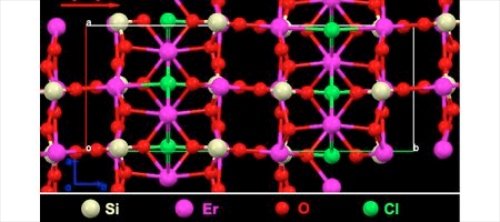
We’ve constructed a world out of fiber optic cable and silicon, but Arizona State University researchers think their new material can do better. They have synthesized a new kind of single-crystal nanowire from a compound of erbium--a material generally used to dope fiber optic cables to amplify their signals--and they claim it could increase the speed of the Internet, spawn a new generation of computers, and improve photovoltaic solar cells, sensor technologies, and solid-state lighting.
That’s a tall order, but the ASU team says their erbium material is up to it. In fact, erbium is already augmenting these things. Erbium atoms are generally used to dope fiber optic cable, boosting its optical properties and amplifying signals. But because of the particular properties of erbium, cramming enough atoms onto a cable to make it an effective amplifier requires a fairly long cable.


So how do you cram more erbium atoms into a cable? You make the cable itself out of erbium. That’s easier said than done, and the breakthrough here is the erbium compound that can be produced in high quality, single-crystal form. Using the compound, the researchers can create objects with 1,000 times more erbium atoms in them than they could when they were simply doping other materials with erbium. And while that doesn’t translate directly into cables or silicon chips that are 1,000-times faster, it does translate into remarkable improvements in speed and efficiency, the researchers say.

It also enables erbium atoms to be packed into small architectures where they couldn’t be packed in significant numbers previously. That means they can be integrated into silicon chips to speed the performance of computers and other devices even as the fiber optic cables that feed those devices data are also improved by the erbium compound. And all of that could be powered with vastly more efficient PV solar cells made of the erbium compound.
The researchers are testing the material for a range of applications, including those mentioned above. There’s no word yet as to when it might be commercially available. But we imagine it will be fast.

Abandoned Nuclear Plant transfromed into Amusement Park

Few days back, Germany announced that it will put an end to the use of nuclear energy by year 2022 to promote renewable energy and protect environment. We here present a perfect use of those nuclear plants once they go off;  A nuclear power plant that never started functionality was closed and later on changed to an amusement park.


The construction of plant started in 1972 but it remained under constant opposition from the public. After a long conflict the government decided to close the plant before it was completed.
After decades, the Wunderland nuclear plant had been converted into a park that provides entertainment to average 600,000 visitors a year. Activities include high flying swing, a carousel and any other that you find in an amusement park.


Source Inhabitat
Environment Clean Generations

RMS Titanic, RIP


1517 died, 711 saved. Among those who died, majority were crew members.

In 1909, the gigantic RMS Titanic construction project funded by J.P Morgan and International Mercantile Corporation aimed to build the biggest, most luxurious ship. The company named White Star Line had constructed the ship with unaccountable labor and made the world believe the unbelievable. The first class ticket of Titanic cost around $4350 (in 1912) which translates into $90,000 USD (in 2006); which no less than a millionaire could afford at that time. The ship had a large swimming pool, electric elevators, a squash court, a Turkish bath, a gymnasium with a mechanical horse and a barber shop.

Unfortunately, the Titanic struck an iceberg on her maiden voyage from England to USA. The ship sank on April 15, 1912 causing 1517 people to die  making a history we all remember today. Below, we show the some shots taken at the construction site of RMS Titanic.


Image Source: HowtoBeARetronaut

Behold: The Dolphin Boat! So Cool!


Just like a real dolphin; this motorboat that can travel on the water surface as well as below water surface and can dive, jump and spin over 360 degrees. Say hello to Seabreacher, a dolphin like boat built by a Californian based company; Innespace Productions. Price tag ranges from US $ 65,000 to US $ 85000 starting from standard model to an advanced performance, highly customized variant.


It comes with Rotax 1500 cc 4 stroke engines in 175 hp and 155 hp standard variants and 215 hp supercharge variant. This water-proof boat is 16 ft in  length and 3 ft wide and weighs nearly 566 kg with 14 gallons fuel storage capacity. Additional features include the on-board communication system, snorkel mounted video camera and dash mounted display. Maximum surface speed is 50 mph,  while submerged speed an go up to 20mph. It can dive up to 5 feet for brief durations, can leap 12 feet in air while jumping and rolling 360 degrees. For more information about this boat, check the official FAQs.
Source: Seabreacher


Environment Clean Generations

Related Posts Plugin for WordPress, Blogger...

Search

Custom Search

 
Design by Wordpress Theme | Bloggerized by Free Blogger Templates | coupon codes