Environment-Clean-Generations

Environment-Clean-Generations
THE DEFINITIVE BLOG FOR EVERYTHING YOU NEED TO KNOW ABOUT THE ENVIRONMENT YOU LIVE IN, WITH REFERENCE TO LIFE, EARTH AND COSMIC SPACE SCIENCES, PRESENTED BY ENVIRONMENTAL ENGINEER DORU INDREI, ENVIRONMENTAL QUALITY AND ENERGY SPACIALIST
"Life is not about what we know, but what we don't know, craving the unthinkable makes it so amazing, that is worth dying for." Doru Indrei
Custom Search
Showing posts with label neutron star. Show all posts

The Most-Studied Star Explosion Ever


New Supernova Type Ia supernova PTF 11kly, the youngest ever detected, is seen above over three successive nights. The left image, taken Aug. 22, shows the event before it exploded supernova, approximately 1 million times fainter than the human eye can detect. The center image, from Aug. 23, shows the supernova at about 10,000 times fainter than the human eye can detect. The right image, from Aug. 24, shows that the event is 6 times brighter than the previous day.

Astronomers just spotted a brand-new supernova mere hours after it exploded, thanks to a robotic telescope and some smart computer algorithms. Now they’re scrambling to use as many telescopes as possible, on Earth and in space, to observe the star’s death throes. 

New supernovae are not terribly rare, but this one is unique because it is so close — 21 million light years away — and it’s of a type that is crucial to astronomical measurements. The supernova, PTF 11kly, is the youngest ever detected.

It showed up in the spiral galaxy M101, the Pinwheel Galaxy, a rather large spiral (10 times the size of the Milky Way) located in the constellation Ursa Major, known to its friends as the Big Dipper. It’s a Type Ia supernova, a very bright type that is used for gauging distances among galaxies. The use of Type Ia supernovae as standard candles helped astronomers prove how rapidly the universe is expanding, and led to the discovery of dark energy. So it’s an important type, and the discovery of a super-new, superclose supernova is tantalizing news for astronomers.


 The Palomar Transient Factory (PTF) survey, which is designed to observe and discover astronomical events as they happen, spotted the supernova earlier this week, according to a news release from the Lawrence Berkeley National Laboratory. First, a robotic observation system mounted on the 48-inch Samuel Oschin Telescope at Palomar Observatory scans the sky, and feeds data to a supercomputer at Berkeley Lab. 

The computers use machine learning algorithms to comb through the PTF data and flag interesting astronomical phenomena. Within a couple hours of spotting PTF 11kly, the system sent its coordinates to telescopes around the world so others could check it out, according to LBL.

Three hours later, telescopes in the Canary Islands captured the supernova’s spectral signature, and 12 hours later, astronomers using the Keck and Lick observatories determined it was a Type Ia. This makes the Canary Islands spectra the earliest Type Ia spectra ever taken. Afterward, astronomers sent an emergency request to NASA to use the Hubble Space Telescope, which will observe the supernova this weekend.

Over at Bad Astronomy, Phil Plait describes that Type Ia supernovae occur when a super-dense white dwarf siphons material off a companion star. If the white dwarf siphons off enough material, it can start to fuse hydrogen into helium, and the whole star will explode. This ginormous energy release makes the supernovae very bright, which makes them useful for gauging intergalactic distances. Type Ia are all thought to explode in similar ways, allowing them to be used as standard benchmarks — standard candles in astronomical parlance. (Click through to Bad Astronomy for a full rundown of what this supernova may mean to astronomy.)
In a fortuitous find, astronomers may actually have a picture of the supernova progenitors. Hubble Space Telescope images taken back in 2002 show two red giant stars very close to the location of PTF 11kly, Plait points out. If a white dwarf was nearby, it could have siphoned material from one of those red giants, sparking the runaway fusion event that led to supernova. Follow-up observations will help prove this.


Catching this supernova so early will give astronomers a glimpse into its outermost layers, which will tell them about the exploded star’s characteristics, according to astronomer Andrew Howell of UC Santa Barbara and Las Cumbres Global Telescope Network. “When you catch them this early, mixed in with the explosion you can actually see unburned bits from star that exploded! It is remarkable,” he said in a news release. “We are finding new clues to solving the mystery of the origin of these supernovae that has perplexed us for 70 years. Despite looking at thousands of supernovae, I’ve never seen anything like this before.”

You can see it, too. The supernova is getting brighter every night, and it should be visible with a decent pair of binoculars within the next couple weeks, according to astronomers at LBL and Oxford University. The best time to see it will be just after evening twilight in the Northern hemisphere.

by "environment clean generations"

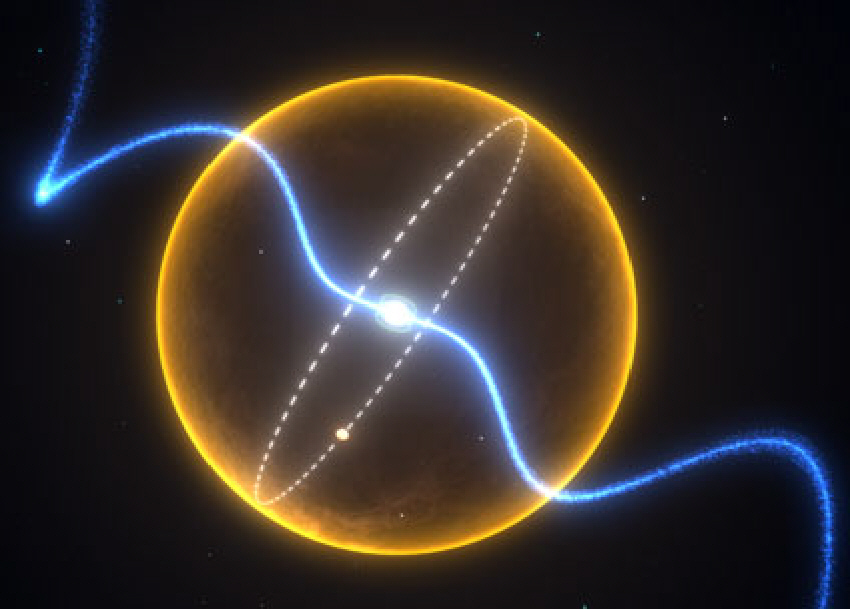
A Planet Made of Diamond


A once-massive star that's been transformed into a small planet made of diamond: that is what University of Manchester astronomers think they've found in the Milky Way. 

The discovery has been made by an international research team, led by Professor Matthew Bailes of Swinburne University of Technology in Melbourne, Australia, and is reported in the journal Science.

The researchers, from The University of Manchester as well as institutions in Australia, Germany, Italy, and the USA, first detected an unusual star called a pulsar using the of the Australian Commonwealth Scientific and Industrial Research Organisation (CSIRO) and followed up their discovery with the Lovell radio telescope, based at Jodrell Bank Observatory in Cheshire, and one of the Keck telescopes in Hawaii.


Pulsars are small spinning stars about 20 km in diameter – the size of a small city – that emit a beam of radio waves. As the star spins and the radio beam sweeps repeatedly over Earth, detect a regular pattern of radio pulses.


For the newly discovered pulsar, known as PSR J1719-1438, the astronomers noticed that the arrival times of the pulses were systematically modulated. They concluded that this was due to the gravitational pull of a small companion planet, orbiting the pulsar in a binary system.

 
 The pulsar and its planet are part of the Milky Way's plane of stars and lie 4,000 light-years away in the constellation of Serpens (the Snake). The system is about an eighth of the way towards the Galactic Centre from the Earth.


The modulations in the radio pulses tell astronomers a number of things about the planet.

First, it orbits the pulsar in just two hours and ten minutes, and the distance between the two objects is 600,000 km—a little less than the radius of our Sun.


Second, the companion must be small, less than 60,000 km (that's about five times the Earth's diameter). The planet is so close to the pulsar that, if it were any bigger, it would be ripped apart by the pulsar's gravity.
But despite its small size, the planet has slightly more mass than Jupiter. 

"This high density of the planet provides a clue to its origin", said Professor Bailes.

The team thinks that the 'diamond planet' is all that remains of a once-massive star, most of whose matter was siphoned off towards the pulsar.


Pulsar J1719-1438 is a very fast-spinning pulsar—what's called a millisecond pulsar. Amazingly, it rotates more than 10,000 times per minute, has a mass of about 1.4 times that of our Sun but is only 20 km in diameter. About 70 per cent of millisecond pulsars have companions of some kind.


Astronomers think it is the companion that, in its star form, transforms an old, dead pulsar into a millisecond pulsar by transferring matter and spinning it up to a very high speed. The result is a fast-spinning millisecond pulsar with a shrunken companion—most often a so-called white dwarf.


"We know of a few other systems, called ultra-compact low-mass X-ray binaries, that are likely to be evolving according to the scenario above and may likely represent the progenitors of a pulsar like J1719-1438" said team member Dr Andrea Possenti, Director at INAF-Osservatorio Astronomico di Cagliari.


But pulsar J1719-1438 and its companion are so close together that the companion can only be a very stripped-down white dwarf, one that has lost its outer layers and over 99.9 per cent of its original mass.

"This remnant is likely to be largely carbon and oxygen, because a star made of lighter elements like hydrogen and helium would be too big to fit the measured orbiting times," said Dr Michael Keith (CSIRO), one of the research team members.


The density means that this material is certain to be crystalline: that is, a large part of the star may be similar to a diamond.


"The ultimate fate of the binary is determined by the mass and orbital period of the donor star at the time of mass transfer. The rarity of millisecond pulsars with planet-mass companions means that producing such 'exotic planets' is the exception rather than the rule, and requires special circumstances," said Dr Benjamin Stappers from The University of Manchester.


The team found pulsar J1719-1438 among almost 200,000 Gigabytes of data using special codes on supercomputers at Swinburne University of Technology in Australia, The University of Manchester in the UK, and the INAF-Osservatorio Astronomico di Cagliari, Italy.


The discovery was made during a systematic search for pulsars over the whole sky that also involves the 100 metre Effelsberg radio telescope of the Max-Planck-Institute for Radioastronomy (MPIfR) in Germany. "This is the largest and most sensitive survey of this type ever conducted. We expected to find exciting things, and it is great to see it happening. 

There is more to come!" said Professor Michael Kramer, Director at the MPIfR.

Professor Matthew Bailes leads the 'Dynamic Universe' theme in a new wide-field astronomy initiative, the Centre of Excellence for All-sky Astrophysics (CAASTRO).

The discovery of the new binary system is of special significance for him and fellow team member Professor Andrew Lyne, from The University of Manchester, who jointly ignited the whole pulsar-planet field in 1991 with what proved to an erroneous claim of the first extra-solar planet. The next year though the first extra-solar planetary system was discovered around the PSR B1257+12.


by "environment clean generations"

Related Posts Plugin for WordPress, Blogger...

Search

Custom Search

 
Design by Wordpress Theme | Bloggerized by Free Blogger Templates | coupon codes